Why the right humidity makes the difference between having or not having the KOMO quality mark
Everything about the KOMO quality mark and why humidity can make all the difference between having the mark or not.
As a joinery factory, window frame manufacturer, or other wood processing company, you probably know the KOMO quality mark as proof of quality for your clients. What is less well known is that one of the unspoken but crucial conditions behind that quality mark is the relative humidity in your production area. And that is exactly where we at BBHUM come in.
Wood and moisture: a relationship that never stands still
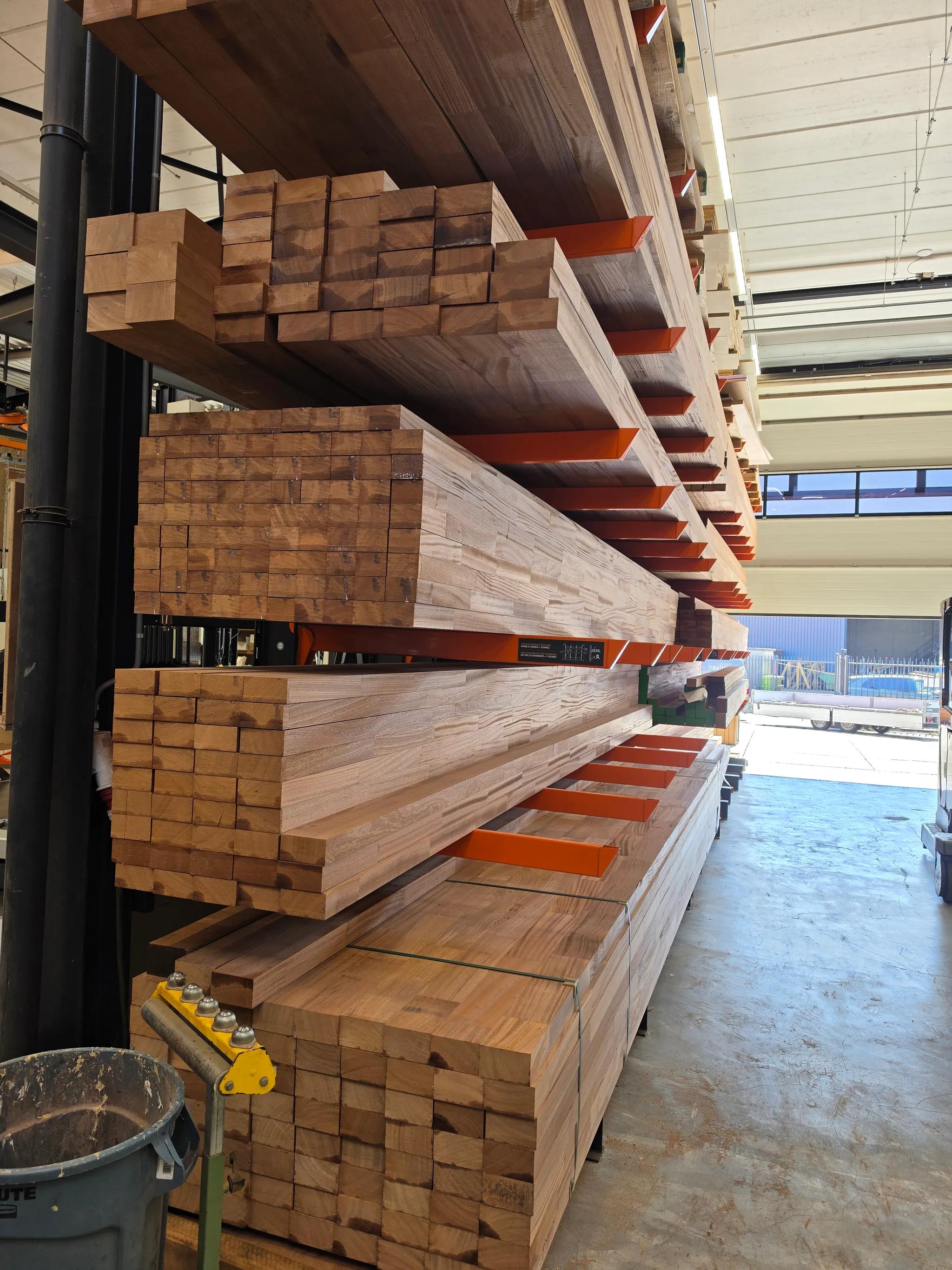
Wood is a living material. Even after processing, it continues to absorb and release moisture, depending on the surrounding humidity. If that humidity is too low, the wood dries out. The consequence: warping, cracking, shrinking, and problems with gluing, varnishing, or finishing. For a production process where dimensions and finish determine the quality of the end product, this is a real risk—in terms of material waste, rework, and ultimately, reputation.
To keep wood stable, a rule of thumb of around 55 to 60% relative humidity in the workspace often applies. For specific processes, such as certain preservation treatments, the requirements are even higher.
Where the KOMO quality mark comes into play
The KOMO quality mark guarantees that a product, process, or company complies with applicable building regulations as well as market quality requirements. For wood processing companies, this quality mark is assessed by the Stichting Keuringsbureau Hout (SKH), which also sets requirements for climate control during processing and storage.
In other words: controlled and demonstrable relative humidity is not just a "nice to have" in the timber sector; it is frequently a strict requirement to obtain and maintain the KOMO quality mark. During audits, it is checked whether the climate in your production area structurally remains within the set range, not only on the day of the inspection.
What this means in practice
For many wood processing companies, this is exactly the point where the puzzle becomes difficult:
- Heated production areas dry out naturally, especially in winter.
- Opening windows or doors does not solve this as long as the indoor temperature is higher than the outdoor temperature.
- Without active control, humidity fluctuates too much to structurally meet the requirements.
The result is that companies that do not have a grip on this risk quality loss, higher failure costs, and disputes during the KOMO/SKH audit.
The role of BBHUM
This is exactly where we at BBHUM add value. We help you find an air humidification solution that suits your production space, capacity, and process. Whether it concerns a single workshop or a large production hall. Specifically, we help companies with:
- Insight into the current situation: measuring how the humidity in your company behaves throughout the year.
- Tailored advice: a solution that meets the SKH/KOMO requirements for your specific process, without over- or under-dimensioning.
- Energy-efficient and low-maintenance systems: so that a stable climate does not come at the expense of your energy costs.
- Support towards certification: a well-founded and functioning system makes demonstrating compliance during audits much easier.
In addition to supporting certification, proper humidity also ensures a more pleasant working environment, less dust nuisance, and less material loss—benefits that pay off immediately on the shop floor.
It is more than a quality mark
Ultimately, it is not just about a sticker on your product. It is about a production process in which you have control over quality, costs, and customer satisfaction. The KOMO quality mark is a nice, recognizable confirmation in this regard, but the foundation lies in a stable indoor climate.
Curious how this works for your company, or do you want to know if your current climate control system meets the requirements for certification? Feel free to contact us; we are happy to offer our advice without obligation.